IN General Assembly

The Indiana General Assembly is the state legislature, or legislative branch, of the state of Indiana. It is a bicameral legislature that consists of a lower house, the Indiana House of Representatives, and an upper house, the Indiana Senate. The General Assembly meets annually at the Indiana Statehouse in Indianapolis.

Members of the General Assembly are elected from districts that are realigned every ten years. Representatives serve terms of two years and senators serve terms of four years. Both houses can create bills, but bills must pass both houses before it can be submitted to the governor and enacted into law.

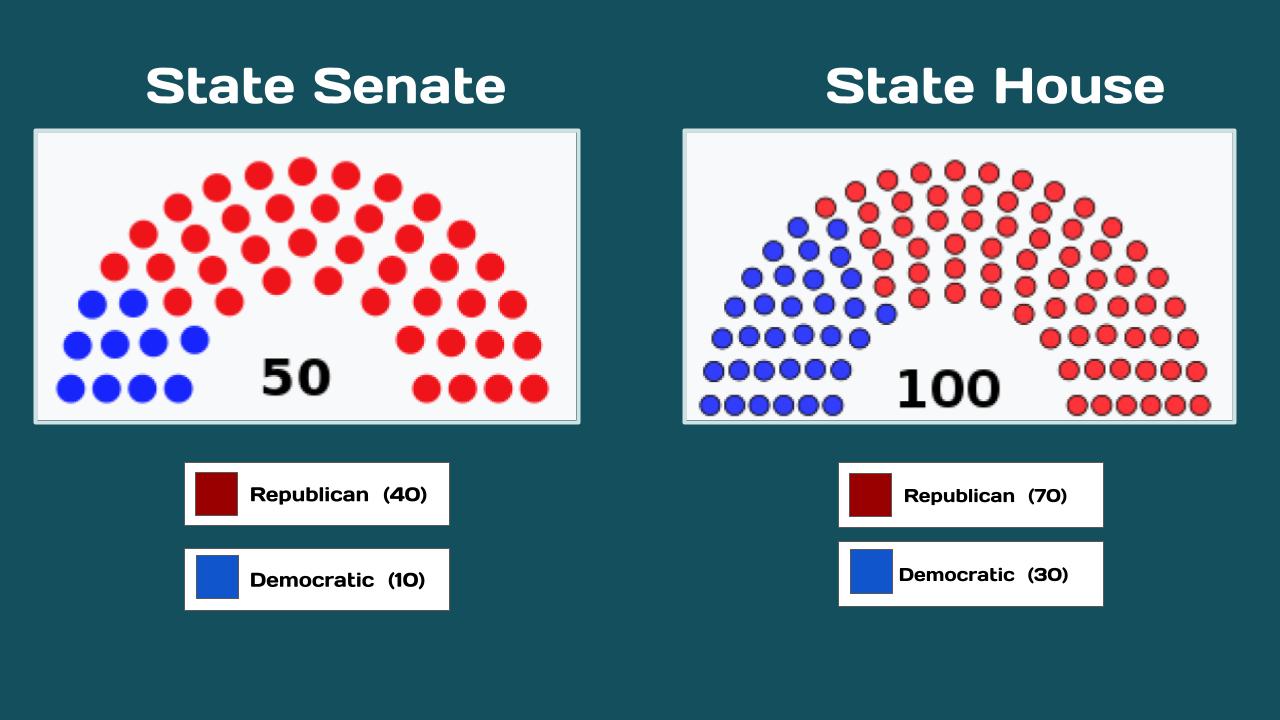
Currently, the Republican Party holds supermajorities in both chambers of the General Assembly. Republicans outnumber Democrats in the Senate by a 39-11 margin, and in the House of Representatives by a 71-29 margin.

Source: Wikipedia

OnAir Post: IN General Assembly
IN Judicial Branch

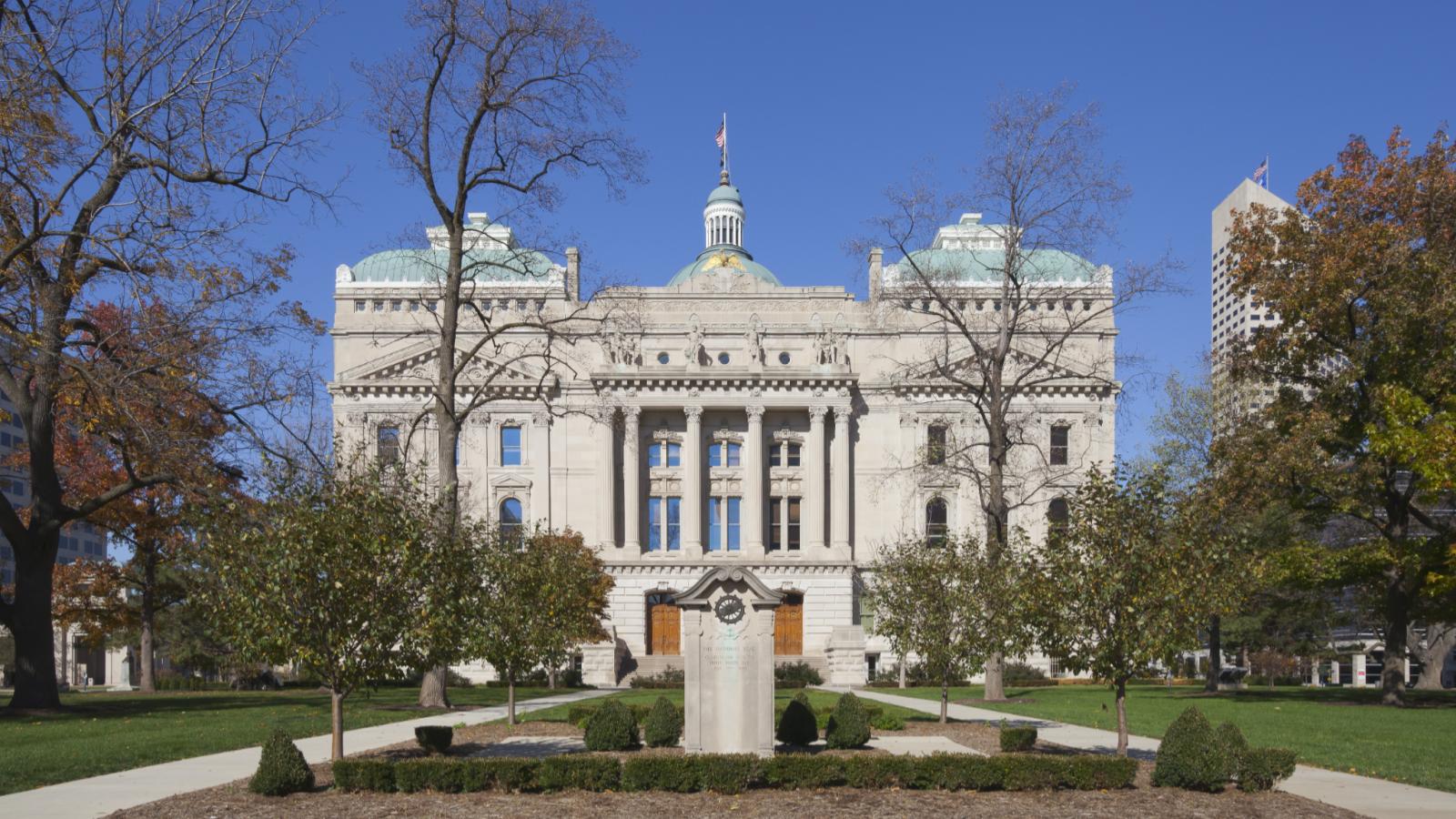
The Indiana Supreme Court, established by Article 7 of the Indiana Constitution, is the highest judicial authority in the state of Indiana. Located in Indianapolis, the Court’s chambers are in the north wing of the Indiana Statehouse.

In December 1816, the Indiana Supreme Court succeeded the General Court of the Indiana Territory as the state’s high court. During its long history the Court has heard a number of high-profile cases, including Lasselle v. State (1820). Originally begun as a three-member judicial panel, the Court underwent major reforms in 1852 and 1971, as well as several other reorganizations. Court reforms led to a majority of Supreme Court cases being delegated to lower courts, an enlarged panel of justices, and employment of a large staff to assist as its caseload increases.

Government Website    Wikipedia page  

OnAir Post: IN Judicial Branch

IN Executive Branch

The government of Indiana is established and regulated by the Constitution of Indiana. The state-level government consists of three branches: the judicial branch, the legislative branch, and the executive branch. The three branches share power and jointly govern the state of Indiana. County and local governments are also constitutional bodies with limited authority to levy taxes, pass legislation, and create and maintain local public infrastructure.

The government of Indiana was first formed in December 1816 and replaced the government of the Indiana Territory. The early government came under criticism beginning as early as the 1820s for having many public offices filled by appointment and lack of delegation of authority to lower officials, requiring state level legislation for things like divorce approval. In 1851 a new constitution was adopted by the state, remedying many of these problems and opening many more office to public election. Significant government reforms were enacted again in 1971 when the state courts were reorganized and new powers were granted to the governor which had historically been a weak institution.

Government Website    Wikipedia page

OnAir Post: IN Executive Branch

Skip to toolbar